
The Complete Dry Eye Center of the Inland Empire
Dry eyes always have a reason. Our Upland ophthalmologists find out whether you make too few tears, whether they evaporate too quickly, or whether your eyelids cannot protect them, then match treatment to that cause.
The Dry Eye Center at Eye MDs of Inland in Upland, California treats the three causes of dry eye: too few tears, tears that evaporate too fast because of blocked oil glands, and eyelids that cannot hold the tear film. Every patient starts with a comprehensive evaluation, then receives targeted care such as punctal plugs, LipiFlow, Xdemvy or eyelid surgery.
Medically reviewed by Marc Shomer, MD, PhD
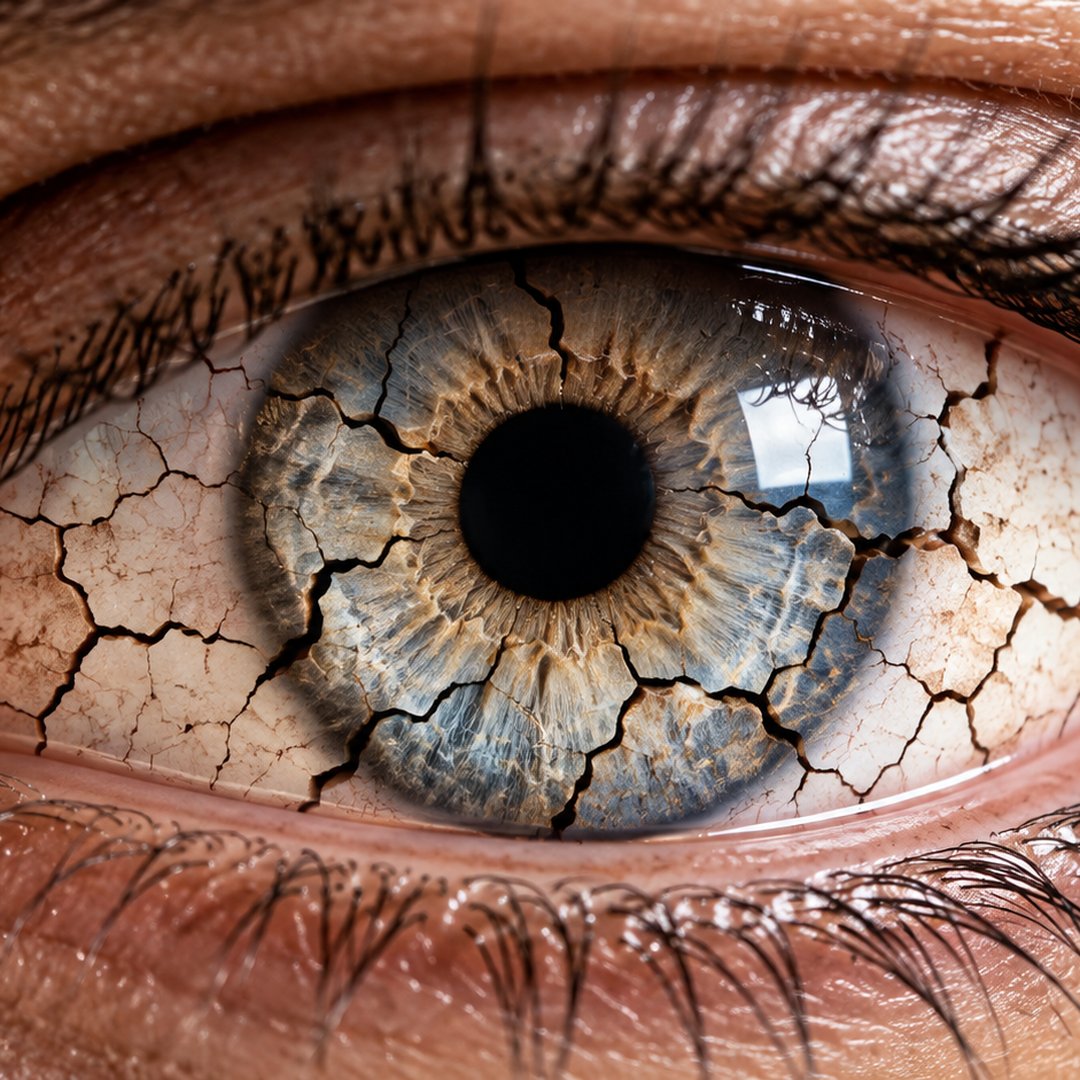
Why are your eyes dry? Three causes, one evaluation
Dry eye syndrome is one of the most common reasons people across the Inland Empire visit an eye doctor, and one of the most undertreated. Many patients spend years switching artificial tears without learning why their eyes are dry. Dry eye is really three different problems, each with a different treatment.
1. Not enough tears
Aqueous-deficient dry eye. The lacrimal gland does not make enough tear volume. More common with age, menopause, Sjogren’s syndrome and other autoimmune disease, antihistamines, antidepressants, diuretics, isotretinoin, and after LASIK. Treated with punctal plugs or Lacrifill, prescription anti-inflammatory drops, and serum tears when severe.
Treatments for underproduction2. Tears that evaporate too fast
Evaporative dry eye from meibomian gland dysfunction (MGD). The eyelid oil glands are blocked or shrunken, so tears evaporate before the next blink. About 86 percent of dry eye has an evaporative component (Lemp et al., Cornea 2012). Linked to blepharitis, Demodex mites and rosacea. Treated with LipiFlow, lid hygiene and Xdemvy.
MGD and LipiFlow3. Eyelids that cannot hold the tears
Anatomic dry eye. An eyelid that turns out (ectropion), turns in (entropion), does not close fully (lagophthalmos), is loose (floppy eyelid), droops (ptosis) or is scarred cannot spread and hold the tear film. No drop fixes an eyelid that does not work; these patients get better with eyelid surgery.
Eyelid surgery for dry eyeMany patients have more than one cause at once: mild underproduction from menopause, blocked oil glands from years of blepharitis, and a lower lid loosened by age. That is why every patient here begins with a comprehensive dry eye evaluation before any treatment is recommended.
What your evaluation includes
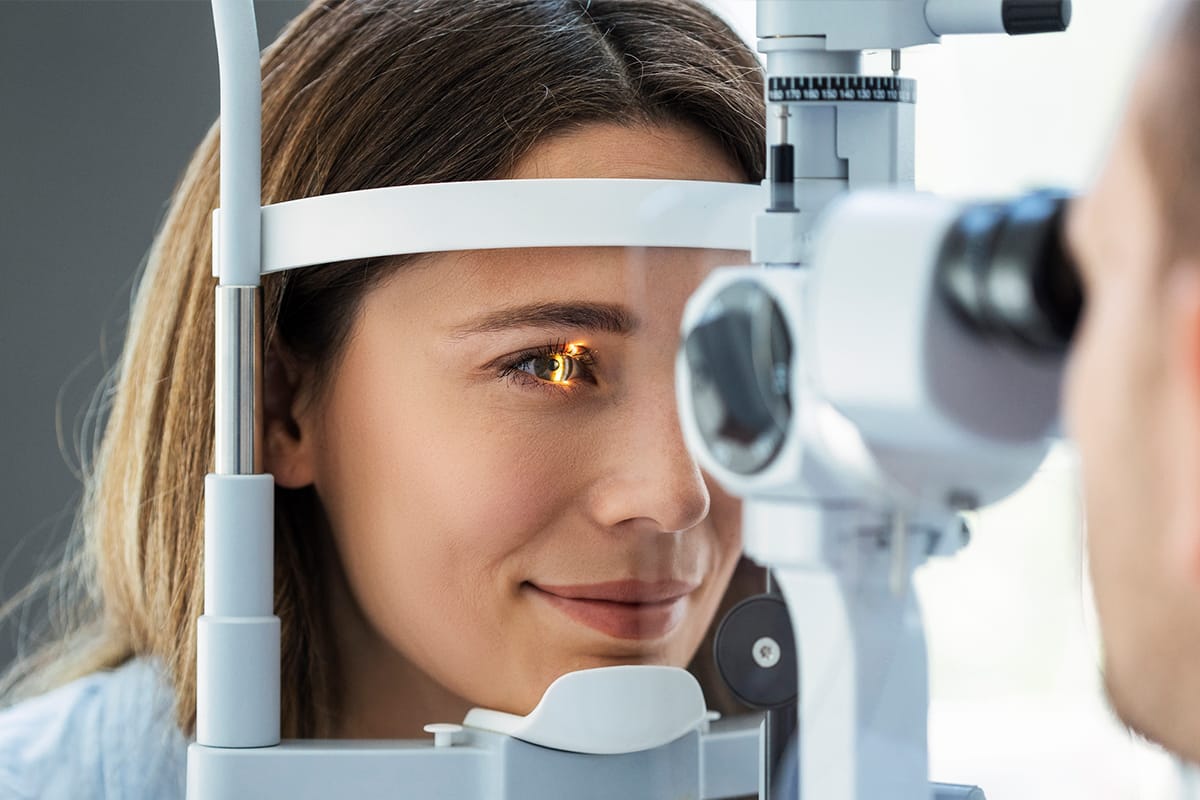
Finding the cause takes more than a quick look and a sample bottle of drops. The evaluation is a dedicated visit that measures how much tear you make, how long the tear film lasts, whether the surface has been damaged, and whether your oil glands and eyelids are doing their job.
- Symptom questionnaire (SPEED or OSDI) and history
- Slit-lamp exam of lids, lashes and cornea
- Tear break-up time (TBUT)
- Fluorescein and lissamine green staining
- Schirmer test of tear production
- Meibomian gland expression and meibography
- Eyelid position, blink and closure assessment
- Check for Demodex collarettes at the lash base
- Medication review
- Blood work referral when Sjogren’s is suspected
Tear osmolarity and MMP-9 testing are added when indicated. You leave knowing which causes apply to you and what we recommend for each. Read more about the dry eye evaluation.
Treatments matched to the cause
Medical, in-office and surgical dry eye care under one roof, chosen by what your evaluation shows.
Prescription anti-inflammatory drops
Cyclosporine or lifitegrast to quiet inflammation, Tyrvaya or Tryptyr to boost tear production.
Prescription dropsEysuvis for dry eye flares
Loteprednol etabonate 0.25 percent, FDA-approved for short-term (up to two weeks) treatment of the signs and symptoms of dry eye disease.
Eysuvis and the researchXdemvy for Demodex blepharitis
Lotilaner 0.25 percent, the first FDA-approved treatment for Demodex blepharitis. One drop in each eye twice daily for six weeks.
XdemvyPunctal plugs
Tiny silicone or dissolvable collagen plugs placed in the tear drainage openings in minutes, to keep your tears on the eye longer.
How plugs are placedLacrifill canalicular gel
An FDA-cleared hyaluronic acid gel injected into the tear duct as an alternative to solid plugs. Typically lasts about six months.
LacrifillAutologous serum tears
Drops compounded from your own blood serum, rich in the growth factors of natural tears, for severe or Sjogren’s dry eye.
Serum tearsLipiFlow thermal pulsation
A 12-minute in-office treatment that warms the inner eyelid to 42.5 degrees Celsius while massaging the glands to clear blockages.
LipiFlowEyelid surgery
Ectropion and entropion repair, ptosis repair, blepharoplasty and lid tightening for lagophthalmos or floppy eyelid.
Eyelid surgeryLid hygiene and home care
Warm compresses, hypochlorous acid or tea tree lid scrubs and omega-3 supplements support every other treatment.
Home care that worksStart with the dry eye treatments overview, or schedule an evaluation and let the findings decide.
Conditions we treat
Blepharitis and Demodex
Inflammation of the eyelid margins: crusty lashes, red lid edges, itching, burning and recurring styes. Collarettes at the lash base are the signature of Demodex mites, which account for roughly 45 percent of blepharitis. Blepharitis, Demodex and Xdemvy.
Meibomian gland dysfunction (MGD)
The leading cause of evaporative dry eye. Gland dropout is permanent, so early treatment matters. MGD, gland expression and LipiFlow.
Sjogren’s syndrome
An autoimmune disease that attacks the tear and saliva glands, causing dry eye plus dry mouth, mostly in women over 40. We order the blood work, co-manage with rheumatology, and treat the eye with serum tears, plugs or Lacrifill and drops. Sjogren’s syndrome and dry eye.
Eyelid position problems
Ectropion, entropion, lagophthalmos, floppy eyelid, ptosis and lid scarring. When the lid is the problem, surgery is the treatment. Eyelid surgery for dry eye.
Recurring styes and chalazia usually signal untreated MGD or blepharitis. For an overview of symptoms, see our dry eye condition page.
From our blog: eye drops that can make dry eye worse, systemic diseases and medications linked to dry eye, and medications that can cause dry eye: pills, injections and patches.
Meet your dry eye specialists
Marc Shomer, MD, PhD is a UCLA-trained, board-certified cataract and refractive surgeon and an Adjunct Associate Professor of Ophthalmology at the Keck School of Medicine of USC. Because dry eye is the most common reason for disappointing vision after cataract surgery, he built the Dry Eye Center around one rule: find the cause first, then treat it. He performs the eyelid procedures, LipiFlow, plug and Lacrifill placement, and directs the medical treatment plans.
Robert Gunzenhauser, MD is our fellowship-trained glaucoma specialist. Glaucoma drops are a frequent, overlooked cause of dry eye, and with both specialists in one building the two conditions are managed together.
Our office is at 1298 W 7th Street in Upland. Se habla español. Meet the team.
Answers from our dry eye specialists.
How do I find a dry eye specialist near me?
Look for an ophthalmologist whose practice performs a dedicated dry eye evaluation (tear break-up time, staining, Schirmer testing and meibomian gland imaging) and offers in-office treatments such as LipiFlow and punctal plugs as well as eyelid surgery. A practice that only hands out artificial tears is not a dry eye center.
What is dry eye syndrome?
A chronic condition in which the tear film cannot keep the surface of the eye comfortable and healthy. It happens for one of three reasons: too few tears are made, the tears evaporate too quickly because the eyelid oil glands are not working, or the eyelids cannot spread and hold the tears. Symptoms include burning, grittiness, redness, fluctuating vision and watering.
How do I get rid of dry eyes for good?
By treating the cause. Blocked oil glands respond to LipiFlow and lid hygiene, Demodex mites to Xdemvy, low tear production to punctal plugs or Lacrifill and anti-inflammatory drops, and eyelid position problems to surgery. Artificial tears ease symptoms but rarely fix the problem, and because gland loss is permanent, earlier treatment gives a better result.
Why is dry eye more common in women?
Hormones drive tear production and oil gland function. The drop in estrogen and androgen after menopause reduces tear volume and thickens meibomian gland oil, and Sjogren's syndrome, an autoimmune cause of severe dry eye, affects women about nine times more often than men. Eye makeup can also block the oil glands.
Can dry eyes feel like there is an eyelash in my eye?
Yes. A foreign body sensation, the feeling that a lash or grain of sand is stuck in the eye, is one of the most common dry eye symptoms. Dry spots on the cornea trigger the same nerves an actual eyelash would. If it is constant, we also check for an inturned lash, entropion or a loose eyelid.
Does dry eye cause glaucoma?
No. Dry eye does not cause glaucoma, but the two often occur together, and many glaucoma eye drops and their preservatives make dry eye worse. Our glaucoma specialist and our dry eye team work in the same building, so we can adjust glaucoma treatment and protect the ocular surface together.
Find Out Why Your Eyes Are Dry
Trust the UCLA-trained, board-certified ophthalmologists at Eye MDs of Inland for a complete dry eye evaluation and treatment matched to the cause. Serving Upland, Rancho Cucamonga, Ontario, Claremont, Montclair, Chino, Pomona, Fontana, San Bernardino and Riverside.