
Eyelid Surgery for Dry Eye
The eyelid is the windshield wiper of the eye. When it turns in, turns out, droops or will not close, no eye drop can do its job. Repairing the lid is the treatment.
Medically reviewed by Marc Shomer, MD, PhD
Why the eyelid matters in dry eye
Every blink does three things. It sweeps fresh tears across the cornea, it squeezes a drop of oil out of the meibomian glands to seal those tears in, and it pushes the used tears toward the drainage openings at the inner corner. For that to work, the lid has to sit flat against the eye, meet the other lid fully, and move with enough force. When it does not, tears pool in the wrong place, evaporate from the exposed surface, or spill down the cheek, and the cornea dries out no matter how many drops you use.
This is the third of the three causes at the Dry Eye Center: anatomic dry eye. It is the cause most often missed, because a patient with a turned-out lower lid and constant watering is frequently sent home with artificial tears. During your dry eye evaluation we specifically check lid position, lid tone, blink completeness and closure during sleep, and when the lid is the problem we say so, because the treatment is surgical.
Eyelid conditions that cause dry eye
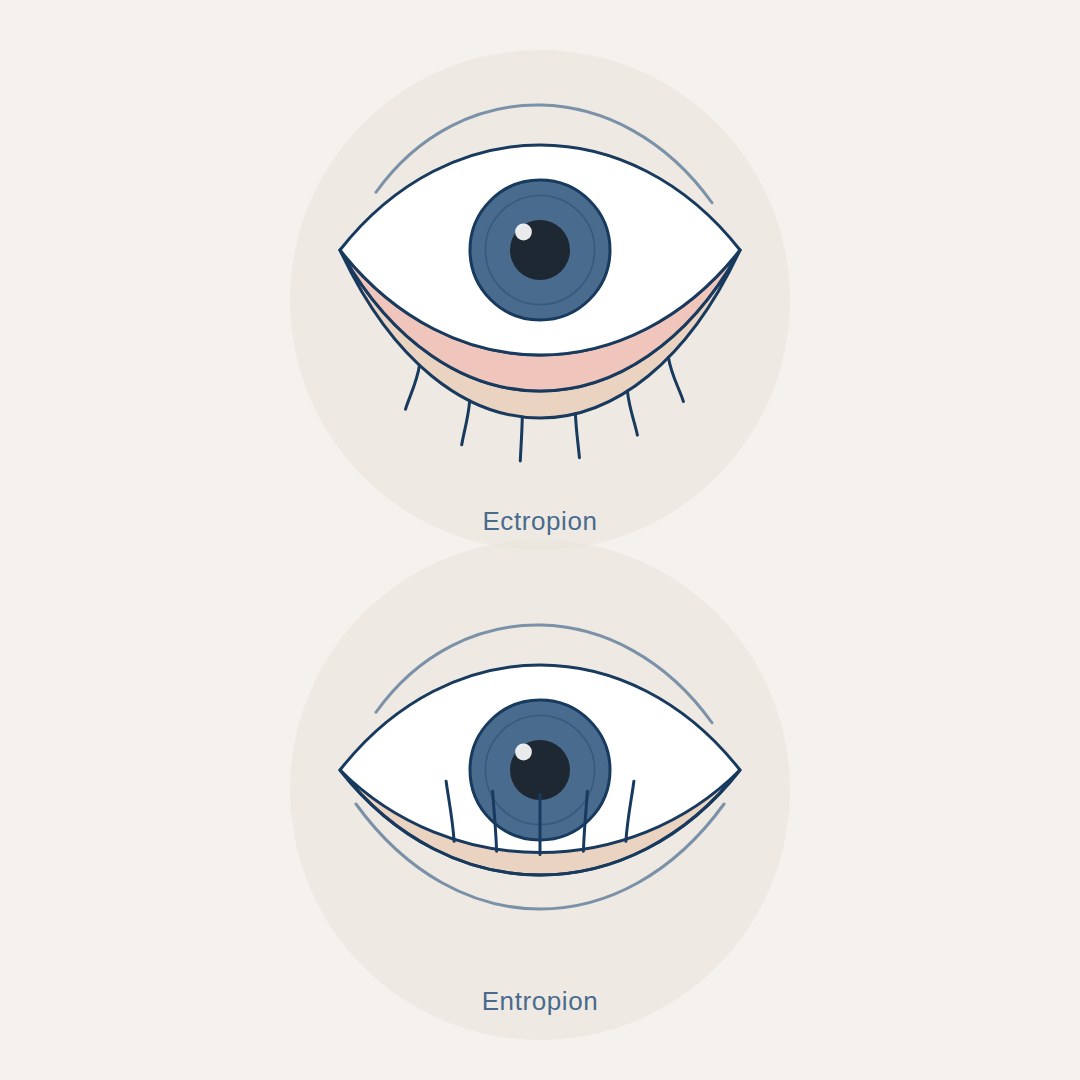
- Ectropion. The lower lid sags and turns outward, away from the eye. The tear drainage opening is pulled off the eye so tears overflow, while the exposed inner lid and cornea dry out and redden.
- Entropion. The lid turns inward so the lashes and skin rub against the cornea with every blink, causing pain, tearing, a constant foreign body sensation and corneal scratches.
- Lagophthalmos. The lids do not close completely, whether from a weak facial nerve (as after Bell’s palsy), prior eyelid surgery that removed too much skin, thyroid eye disease, or simply sleeping with the eyes slightly open (nocturnal lagophthalmos). The exposed strip of cornea dries every night.
- Floppy eyelid syndrome and lid laxity. The lid is so loose that it flips over on the pillow or fails to press against the eye. Strongly associated with sleep apnea, and a common, underdiagnosed cause of chronic morning irritation.
- Ptosis and dermatochalasis. A drooping upper lid or heavy fold of excess skin changes how the lid moves and can interfere with a full blink; in some patients it also obstructs vision.
- Scarring. Trauma, burns, prior surgery or skin conditions can tether the lid so it cannot move or close normally.
Procedures we perform
Marc Shomer, MD, PhD performs eyelid surgery for dry eye in our Upland office and surgery center. Most procedures are done under local anesthesia with light sedation, take under an hour, and let you go home the same day.
Ectropion repair
The loose lower lid is tightened at its outer corner (a lateral tarsal strip procedure) so that it sits flat against the eye again and the drainage opening returns to its normal position. When scarring or shortened skin is pulling the lid out, a skin graft may be added. Watering and exposure usually improve within days. Learn more about ectropion and entropion treatment.
Entropion repair
The inturned lid is rotated back to its normal position and tightened so the lashes no longer touch the cornea. Temporary relief can be given in the office with a suture technique or by taping the lid; definitive repair is a short outpatient procedure that also protects the cornea from ongoing scratching.
Lid tightening for lagophthalmos and floppy eyelid
When the lids are too lax to close or to hold their shape, a horizontal tightening procedure restores tone so the lid meets its partner and presses the tear film against the eye. Lagophthalmos from nerve weakness is assessed individually, since the right procedure depends on how much closure has been lost. Patients with floppy eyelid syndrome are also referred for a sleep study, since untreated sleep apnea will loosen the lid again.
Ptosis repair and blepharoplasty
A drooping upper lid is lifted by tightening the levator muscle (ptosis repair), and excess skin that weighs on the lid is removed with an upper blepharoplasty. In dry eye patients these procedures are planned conservatively, because removing too much skin or raising the lid too far can itself cause incomplete closure. We measure closure and tear function before surgery so the lid ends up in the right place.
What to expect
Eyelid surgery is outpatient. Expect bruising and swelling for one to two weeks, an antibiotic ointment along the incision, and a follow-up visit in about a week to check the position of the lid. Most patients return to desk work within a few days and to full activity, including exercise, in about two weeks. Sutures, if not dissolvable, are removed at the first visit. Because the lid position is corrected permanently, the improvement in dryness, watering and irritation is usually lasting, though normal aging can loosen tissue again over many years.
Repairing the eyelid does not cure the other two causes of dry eye. Many of our surgical patients also have meibomian gland dysfunction or low tear production and continue lid hygiene, LipiFlow or punctal plugs and prescription drops after surgery. The difference is that once the lid works, those treatments finally have a chance to succeed.
Ectropion and entropion repair, lid tightening and ptosis repair that interferes with vision or corneal health are medical procedures and are generally covered by medical insurance and Medicare. Blepharoplasty performed purely for appearance is not. We document the findings that support medical necessity at your evaluation.
Answers from our dry eye specialists.
Can an eyelid problem cause dry eye?
Yes. If the eyelid turns out (ectropion), turns in (entropion), does not close fully (lagophthalmos), is too loose (floppy eyelid) or droops (ptosis), it cannot spread and hold the tear film over the cornea. The exposed surface dries, the eye waters in response, and artificial tears give little relief until the lid position is corrected surgically.
Why do my eyes water if they are dry?
An irritated, dry surface triggers reflex tearing, and if the lower lid has sagged away from the eye (ectropion), the tear drainage opening is no longer positioned to carry the tears away, so they spill over. Repairing the lid position stops the overflow and protects the cornea.
Can I sleep with my eyes slightly open?
Many people do without knowing it. Nocturnal lagophthalmos leaves a strip of cornea exposed all night and causes red, dry, irritated eyes on waking. We check closure at your evaluation. Mild cases are managed with a bedtime ointment or moisture goggles; when lid laxity is the cause, a lid tightening procedure corrects it.
Is eyelid surgery for dry eye covered by insurance?
Ectropion repair, entropion repair, lid tightening for exposure and ptosis repair that affects vision or corneal health are medical procedures, generally covered by medical insurance and Medicare when the examination documents the problem. Cosmetic blepharoplasty is not covered. We review coverage with you before scheduling.
How long is recovery after eyelid surgery?
Bruising and swelling last about one to two weeks. Most patients are back to desk work in a few days and to full activity in about two weeks. The procedures are outpatient, usually under local anesthesia with light sedation, and the corrected lid position is generally lasting.
When the Eyelid Is the Problem, Fix the Eyelid
Eyelid surgery for dry eye is performed by the board-certified surgeons at Eye MDs of Inland in Upland. Serving Rancho Cucamonga, Ontario, Claremont, Montclair, Chino, Pomona, Fontana, San Bernardino and Riverside.