
Sjogren’s Syndrome and Dry Eye
When dry eye comes with dry mouth, fatigue or joint pain, the cause may be autoimmune. We test for it, coordinate with rheumatology, and treat the eye with the strongest tools available.
Medically reviewed by Marc Shomer, MD, PhD
What is Sjogren’s syndrome?
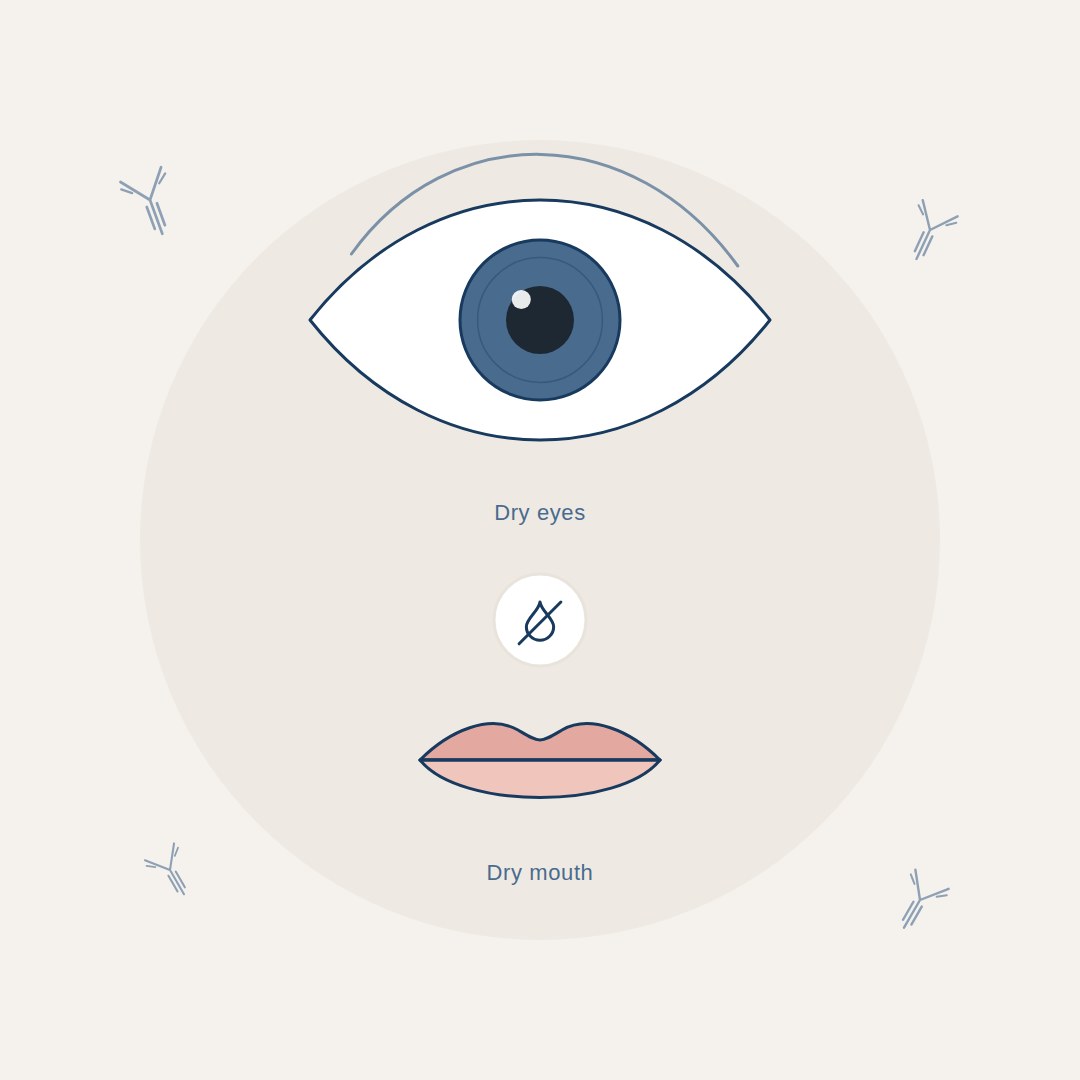
Sjogren’s syndrome is a chronic autoimmune disease in which the immune system attacks the body’s moisture-producing glands, above all the lacrimal glands that make tears and the salivary glands that make saliva. The result is the combination that defines the disease: dry eyes and dry mouth. It affects roughly nine women for every man, usually appears after age 40, and is one of the most common autoimmune diseases in the United States, yet it often goes undiagnosed for years because each symptom is evaluated by a different doctor.
Sjogren’s can occur on its own (primary Sjogren’s) or alongside another autoimmune condition such as rheumatoid arthritis, lupus or scleroderma (secondary Sjogren’s). Beyond the glands, it can cause fatigue, joint and muscle pain, dry skin, and in a minority of patients involvement of the lungs, kidneys, nerves or lymph nodes, which is why a diagnosis matters far beyond the eye.
How Sjogren’s affects the eye
Sjogren’s is the classic cause of aqueous-deficient dry eye, the underproduction type in our three-cause framework. The lacrimal gland is infiltrated by immune cells and simply cannot make enough tear volume. Because the surface of the eye is also inflamed, the dryness is typically more severe than ordinary dry eye and more likely to damage the cornea. Patients describe constant burning and grittiness, light sensitivity, thick mucus strands, blurred vision and pain with reading. Many also have meibomian gland dysfunction on top of the low tear volume, which compounds the problem. In advanced cases the cornea can develop filaments, erosions and, rarely, ulcers, so Sjogren’s dry eye needs closer follow-up than the average patient.
How we diagnose Sjogren’s syndrome
Sjogren’s is frequently first suspected in the eye clinic, because the eye findings are so characteristic. During a comprehensive dry eye evaluation, a very low Schirmer test (little or no wetting of the strip in five minutes) combined with heavy lissamine green staining of the conjunctiva and cornea is the pattern that raises the question. We then ask about dry mouth, difficulty swallowing dry food, dental cavities, swollen glands in the cheeks or jaw, joint pain and fatigue, and about any family history of autoimmune disease.
Blood work
When Sjogren’s is suspected we refer for a panel of blood tests: SS-A (Ro) and SS-B (La) antibodies, which are the most specific markers for the disease, along with an antinuclear antibody (ANA) and rheumatoid factor (RF). A positive SS-A antibody with objective dry eye and dry mouth is generally enough to establish the diagnosis. Some patients with clear disease have negative antibodies, and in those cases a rheumatologist may recommend a lip biopsy of the minor salivary glands to confirm it.
Rheumatology co-management
The eye is only one part of Sjogren’s. Once the diagnosis is made or strongly suspected we coordinate with a rheumatologist who manages the systemic disease, monitors for complications, and prescribes systemic medication when appropriate. We continue to manage the ocular surface and share findings with the rest of your care team, including your dentist, since dry mouth accelerates tooth decay. If you already have a rheumatologist, we work with them directly.
Treating Sjogren’s dry eye
Because the tear gland itself is damaged, the strategy is to keep every tear you make on the eye as long as possible, replace what the gland cannot provide, and calm the inflammation on the surface. Most patients need several of the following together.
Prescription anti-inflammatory drops
Cyclosporine or lifitegrast class drops reduce the immune inflammation on the ocular surface and, over two to three months, help the remaining gland tissue produce more tears. Short courses of a steroid drop such as Eysuvis (loteprednol 0.25 percent, up to two weeks) are used to bring a flare under control quickly.
Punctal plugs and Lacrifill
Tears drain away through tiny openings (puncta) in the inner corner of each eyelid. Closing those openings keeps your natural tears and your drops on the eye much longer. Silicone or dissolvable collagen punctal plugs are placed in the office in minutes. Lacrifill, an FDA-cleared hyaluronic acid gel injected into the canaliculus, is an alternative to solid plugs that typically lasts about six months and cannot fall out or rub. Read how plugs and Lacrifill are placed.
Autologous serum tears
Artificial tears are only water, salt and lubricant. Natural tears contain growth factors, vitamins and proteins that keep the corneal surface healthy, and Sjogren’s patients lack them. Autologous serum tears are made from your own blood: a sample is drawn, the serum is separated and diluted, and it is bottled by a compounding pharmacy as a preservative-free drop used several times a day. Serum tears are the most effective option we have for severe Sjogren’s dry eye and for neurotrophic or post-surgical surface disease that has not healed with conventional drops.
Supporting care
Preservative-free artificial tears and a lubricating gel or ointment at bedtime, moisture-chamber glasses for wind and air conditioning, a humidifier at night, omega-3 supplements, and treatment of any coexisting MGD or blepharitis all help. We also review your medications, since antihistamines, antidepressants and diuretics reduce tear production further. Marc Shomer, MD, PhD directs Sjogren’s dry eye care at Eye MDs of Inland and follows these patients closely to protect the cornea.
Answers from our dry eye specialists.
What are the eye symptoms of Sjogren's syndrome?
Severe, persistent dry eye: burning, grittiness, a sandy or foreign body feeling, light sensitivity, stringy mucus, blurred vision and pain with reading or screens. The dryness is usually worse than ordinary dry eye and comes with dry mouth. On examination, tear production is very low and the surface of the eye stains heavily with dye.
What blood tests diagnose Sjogren's syndrome?
The key tests are SS-A (Ro) and SS-B (La) antibodies, together with an antinuclear antibody (ANA) and rheumatoid factor (RF). A positive SS-A with objective dry eye and dry mouth generally confirms the diagnosis. If antibodies are negative but the picture is convincing, a rheumatologist may recommend a lip biopsy of the minor salivary glands.
Why does Sjogren's mostly affect women?
About nine of ten patients with Sjogren's are women, most diagnosed after age 40. Sex hormones influence immune regulation and tear gland function, and the fall in estrogen and androgen around menopause is thought to unmask the disease. This is one reason dry eye in general is more common in women.
What are autologous serum tears?
Eye drops made from your own blood serum, separated, diluted and bottled by a compounding pharmacy as a preservative-free drop. Serum contains the growth factors, vitamins and proteins present in natural tears but absent from artificial tears, which makes it the most effective drop for severe Sjogren's, neurotrophic and post-surgical dry eye.
Can Sjogren's dry eye be cured?
Sjogren's is a lifelong autoimmune disease, so the goal is control rather than cure. With anti-inflammatory drops, punctal plugs or Lacrifill, serum tears and coordinated rheumatology care, most patients achieve a comfortable eye and avoid corneal damage. Regular follow-up matters because the ocular surface in Sjogren's can deteriorate quietly.
Severe Dry Eye Deserves a Full Workup
If your dry eye is severe or comes with dry mouth, schedule an evaluation with the board-certified ophthalmologists at Eye MDs of Inland in Upland. Serving Rancho Cucamonga, Ontario, Claremont, Montclair, Chino, Pomona, Fontana, San Bernardino and Riverside.