
Blepharitis, Demodex and Xdemvy
Crusty lashes, red lid margins, itching and recurring styes usually mean blepharitis. Nearly half the time, microscopic Demodex mites are the reason, and there is now a treatment made specifically for them.
Medically reviewed by Marc Shomer, MD, PhD
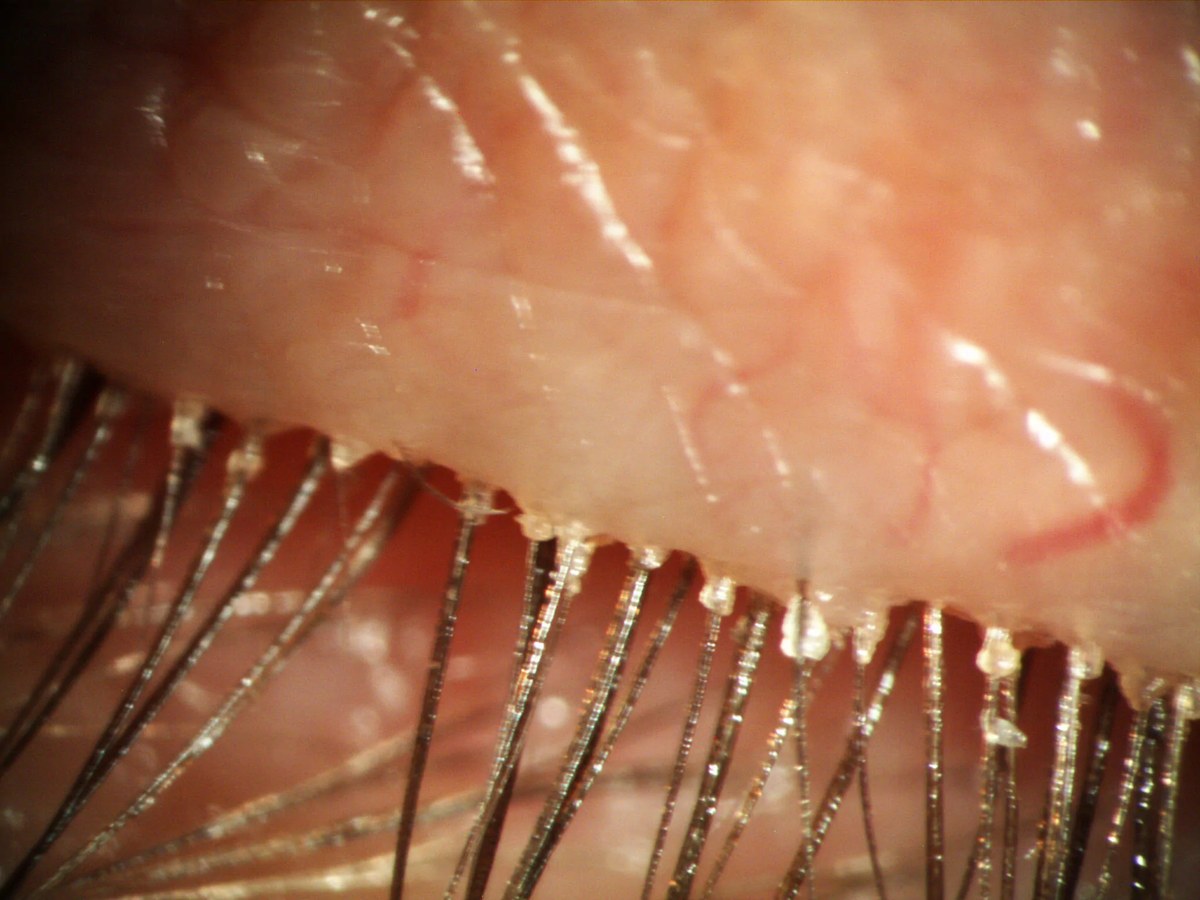
What is blepharitis?
Blepharitis is chronic inflammation of the eyelid margins, the strip of skin where the lashes grow and the oil glands open. It is one of the most common conditions we see at the Dry Eye Center, and one of the most frustrating, because it smolders for years, flares without warning, and returns after every treatment that does not address the cause.
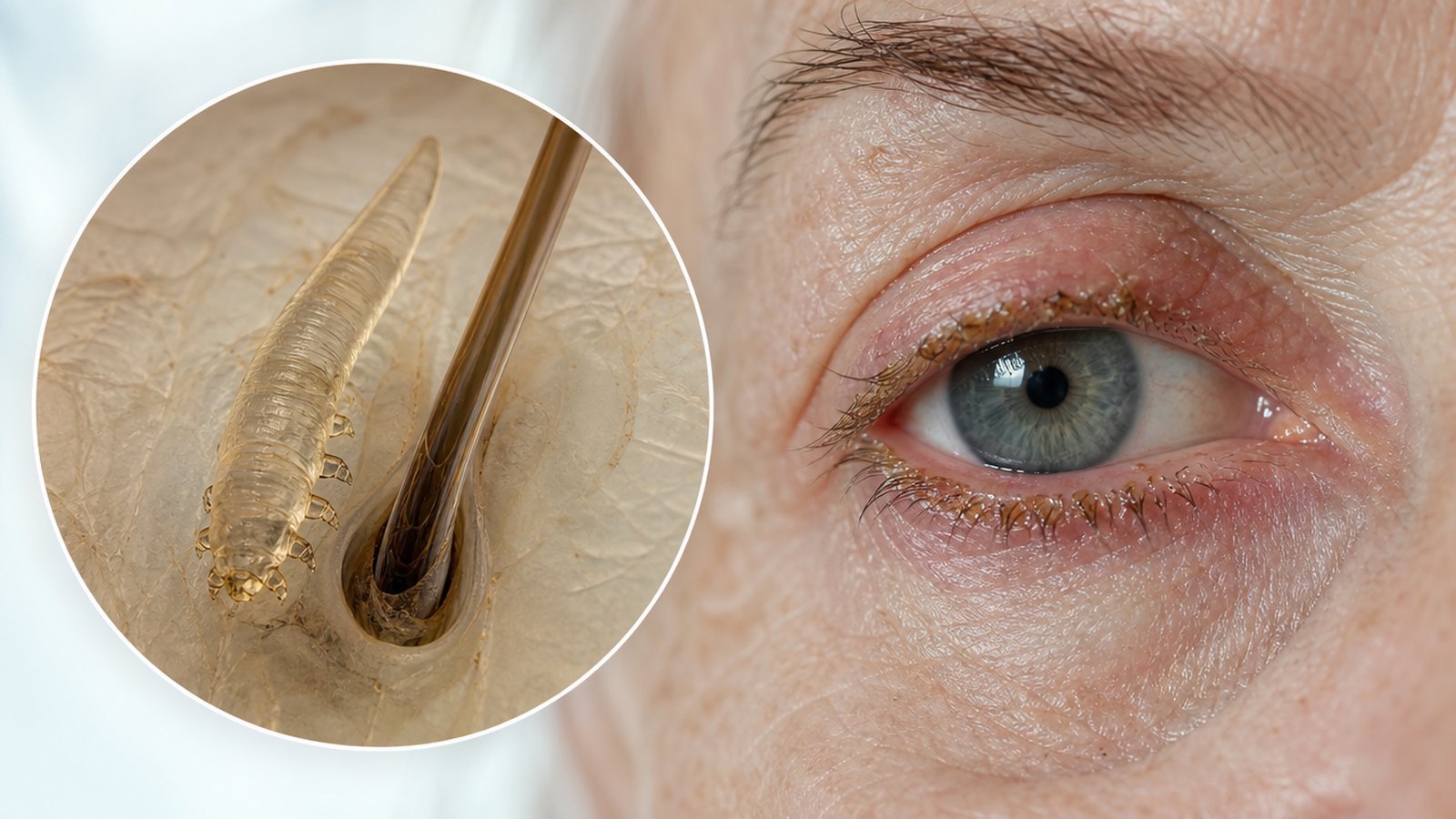
There are two kinds, and most patients have both:
- Anterior blepharitis affects the outside edge of the lid, at the base of the lashes. It is caused by bacteria (usually staphylococcus) or by Demodex mites living in the lash follicles.
- Posterior blepharitis affects the inner edge of the lid where the meibomian glands open. It is the same condition as meibomian gland dysfunction (MGD), and it is the reason blepharitis and evaporative dry eye go together.
Symptoms of blepharitis
- Crusty or greasy lashes, especially on waking
- Red, thickened or swollen lid margins
- Itching and burning along the lash line
- Gritty or foreign body sensation
- Cylindrical dandruff (collarettes) at the lash base
- Recurring styes and chalazia
- Lashes that fall out or grow in odd directions
- Dry, watery or light-sensitive eyes
Because the lid margin is also where the tear film is made and spread, untreated blepharitis destabilizes the tears and damages the oil glands, and it commonly leads to styes and chalazia when an inflamed gland becomes blocked.
Demodex blepharitis
Demodex are microscopic eight-legged mites that live in hair follicles and oil glands on human skin. Nearly everyone carries some by middle age, but when they multiply in the eyelash follicles they cause a distinctive, stubborn form of blepharitis. The mites feed on skin cells and oil, lay eggs in the follicle, and leave a waste product that collects at the base of the lash as a clear, cylindrical sleeve. These sleeves, called collarettes, are the most reliable sign of Demodex and are visible at the slit lamp when you look down.
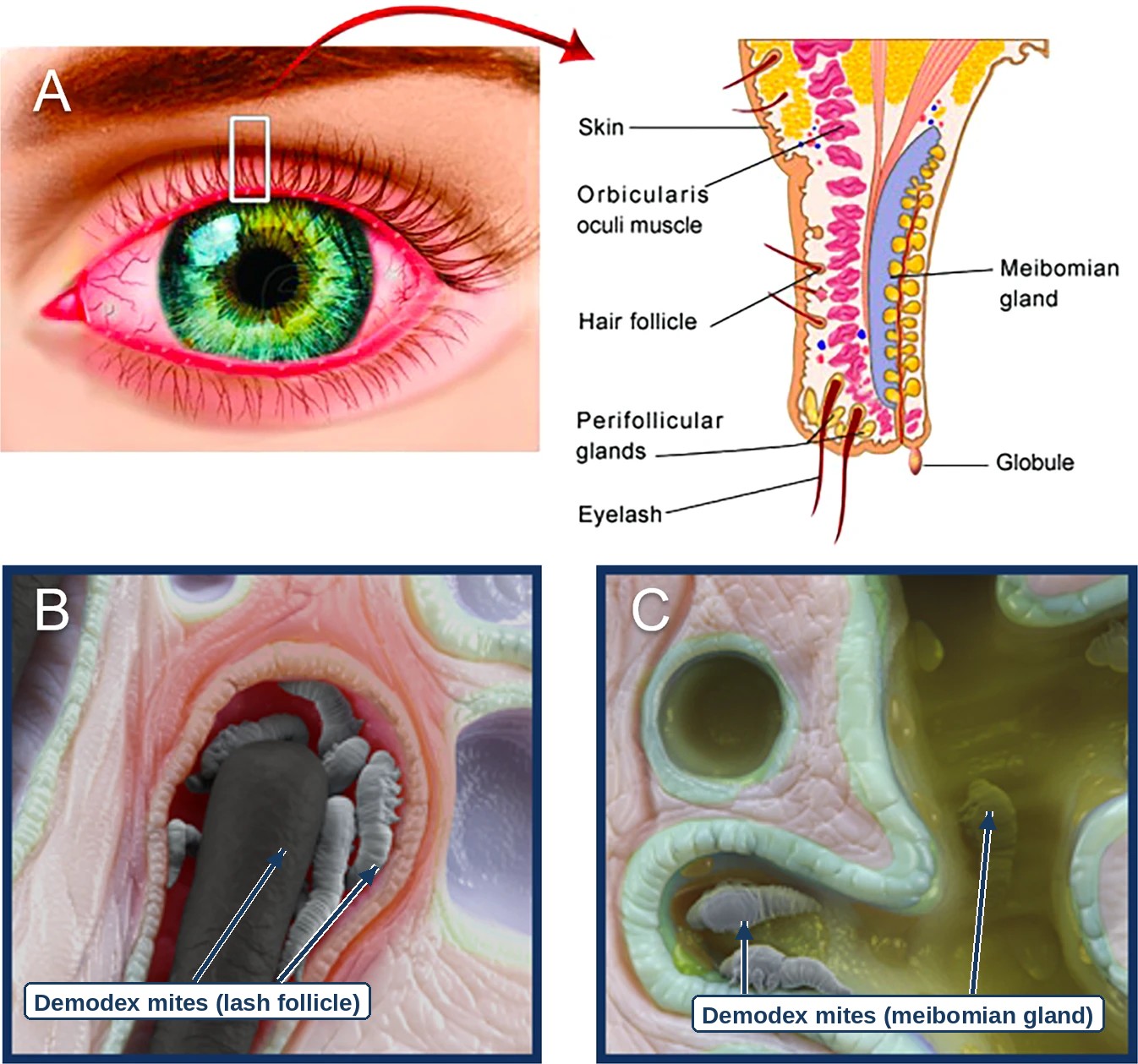
Demodex accounts for roughly 45 percent of blepharitis cases. Patients typically report itching that is worst in the morning, lid margin redness, lash loss, and eyes that never feel clean no matter how carefully they wash. The mites also carry bacteria, aggravate rosacea, and contribute to meibomian gland dysfunction, so treating them often improves the whole dry eye picture. Until recently there was no approved treatment: tea tree oil products help some patients but sting and do not reliably kill mites inside the follicle.
Xdemvy: the first FDA-approved treatment for Demodex blepharitis
Xdemvy (lotilaner ophthalmic solution 0.25 percent) is a prescription eye drop that kills Demodex mites by paralyzing their nervous system. It is the first FDA-approved treatment for Demodex blepharitis. The course is simple: one drop in each eye twice a day, about 12 hours apart, for six weeks.
In the two pivotal trials, SATURN-1 and SATURN-2, 44 to 56 percent of patients treated with Xdemvy had a complete collarette cure compared with 7 to 13 percent of patients who received the vehicle drop without the active ingredient. The most common side effect was stinging or burning when the drop went in, reported by about 10 percent of patients. We confirm the diagnosis by finding collarettes at your evaluation, prescribe the six-week course, and recheck the lash line when it is complete.
Blepharitis treatment at home, and in the office
Blepharitis is managed, not cured in a single visit, and the daily routine you do at home matters as much as anything we prescribe.
Home care that works
- Warm compresses. A warm washcloth or microwavable eye mask held against closed lids for five to ten minutes, once or twice daily, softens crusts and melts thickened oil in the glands.
- Lid scrubs. After the compress, gently clean along the lash line. Hypochlorous acid sprays or wipes are well tolerated and reduce bacteria; tea tree based wipes have some activity against Demodex. Diluted baby shampoo is harsher on the eye and less effective.
- Omega-3 supplements. Fish oil or flaxseed oil improves the quality of meibomian gland oil in many patients over two to three months.
- Makeup and lash hygiene. Remove eye makeup completely every night, replace mascara every three months, avoid eyeliner on the inner lid margin, and know that lash extensions are a common home for Demodex.
What does not work
Redness-relieving drops mask the redness and make it rebound. Antibiotic ointments help only when bacteria are the cause and do nothing for mites or blocked glands. Scrubbing harder does not remove Demodex from inside the follicle. Artificial tears alone treat the symptom, not the lid.
In-office treatment
When home care is not enough, we add what your evaluation calls for: Xdemvy for Demodex, a short course of a steroid drop or Eysuvis to settle an inflamed lid margin, and LipiFlow to clear the meibomian glands when posterior blepharitis has blocked them. Persistent chalazia can be drained in the office. When dry eye has an underproduction component as well, punctal plugs, Lacrifill or prescription anti-inflammatory drops round out the plan. Marc Shomer, MD, PhD reviews every blepharitis treatment plan in our Upland office.
Answers from our dry eye specialists.
What is the best treatment for blepharitis?
It depends on the cause. Bacterial blepharitis responds to lid hygiene and, when needed, antibiotics. Demodex blepharitis is treated with Xdemvy, the first FDA-approved drop for the mites, twice daily for six weeks. Posterior blepharitis (meibomian gland dysfunction) is treated by clearing the glands with warm compresses and LipiFlow. An examination of the lash line and gland openings tells us which you have.
How do I treat blepharitis at home?
Apply a warm compress to closed eyelids for five to ten minutes once or twice a day, then gently clean the lash line with a hypochlorous acid or tea tree based lid wipe. Remove eye makeup fully every night and consider an omega-3 supplement. Home care controls mild blepharitis but does not eliminate Demodex mites or unblock deeply obstructed glands.
How do I know if I have Demodex blepharitis?
The telltale sign is collarettes, clear cylindrical sleeves of debris around the base of the eyelashes, which your eye doctor sees at the slit lamp when you look down. Morning itching, lash loss and lash-line redness that has not responded to ordinary lid scrubs are also typical. Demodex accounts for roughly 45 percent of blepharitis.
How does Xdemvy work and how well does it work?
Xdemvy (lotilaner 0.25 percent) paralyzes and kills Demodex mites in the lash follicles. It is used as one drop in each eye twice daily, about 12 hours apart, for six weeks. In the SATURN-1 and SATURN-2 trials 44 to 56 percent of treated patients had complete clearance of collarettes versus 7 to 13 percent with a vehicle drop. About 10 percent noted stinging or burning on instillation.
Can blepharitis be removed permanently?
Blepharitis is a chronic condition that is controlled rather than removed. Demodex can be cleared with Xdemvy, blocked glands with LipiFlow, and daily lid hygiene keeps both from returning, but flares are common if the routine stops. Most patients who stay on a maintenance plan have few or no symptoms.
Get Blepharitis Under Control
The dry eye specialists at Eye MDs of Inland diagnose and treat blepharitis and Demodex in Upland. Serving Rancho Cucamonga, Ontario, Claremont, Montclair, Chino, Pomona, Fontana, San Bernardino and Riverside.