
Eye Exams in Upland, CA
Looking for an eye exam in Upland from a medical eye doctor? At Eye MDs of Inland, comprehensive eye exams are performed by board-certified ophthalmologists, physicians who specialize in the eye, and our entire team speaks Spanish. From checking your glasses prescription to a dilated exam of the retina, we look after the health of your eyes, not just how well you read the chart.
What a Comprehensive Eye Exam Includes
A complete eye exam is much more than reading letters on a screen. It is a medical evaluation of the health of your eyes, front to back, which in our Upland office includes:
- Visual acuity: how well you see at distance and up close
- A refraction to check whether you need new glasses
- Eye pressure measurement, a key step in detecting glaucoma
- A dilated exam, using drops that widen the pupil so we can see inside the eye
- A detailed look at the retina and the optic nerve
- Evaluation of the lens, the surface of the eye and the eyelids
After dilation, your vision may be blurry and light-sensitive for a few hours. Bring sunglasses and, if you can, someone to drive you home.
Why Have Your Eye Exam With an Ophthalmologist?
An ophthalmologist is a medical doctor who specializes in the eye, with surgical training, and is qualified to diagnose and treat eye disease, not only to measure your glasses prescription. That matters because many of the conditions that do the most damage to sight advance quietly: at first they do not hurt or cause obvious symptoms, and by the time a person notices the change, the damage can be hard to reverse.
During your eye exam, our doctors check your eyes for early signs of conditions such as:
- Cataracts: clouding of the eye's natural lens that blurs vision over the years
- Glaucoma: damage to the optic nerve, often from elevated eye pressure, that can take vision without warning
- Dry eye: burning, irritation or a gritty feeling in the eyes
- Pterygium: a growth of tissue over the white of the eye, common in our sunny climate
- Diabetic retinopathy: the damage diabetes can cause to the blood vessels of the retina
Finding these conditions early opens the door to treating them when the most can still be done for your sight. And if your exam finds glaucoma or a suspicion of glaucoma, you do not have to go anywhere else: our specialty division, Inland Glaucoma Center, sees patients in the same building.
Diabetic Retina Exam
If you live with diabetes, the yearly diabetic retina exam is one of the most important medical appointments of the year. Diabetes can slowly damage the small blood vessels of the retina, the layer of the eye that captures images, and that damage, diabetic retinopathy, usually advances without symptoms at first. That is why people with diabetes are advised to have a dilated retina exam at least once a year, even when their vision feels fine.
At your exam, our doctors dilate the pupil and examine the retina directly for early signs of damage. Finding changes early lets us coordinate your eye care with your primary care physician and discuss treatment options before vision is affected. You can read more on our diabetic retinopathy page.
Your Eye Doctors in Upland
Dr. Marc Shomer, MD, PhD, is a board-certified ophthalmologist and cataract surgeon, trained at UCLA, and an Adjunct Associate Professor of Ophthalmology at the Keck School of Medicine of USC. Dr. Robert Gunzenhauser, MD, is a board-certified ophthalmologist, trained at UCLA, and a fellowship-trained glaucoma specialist from the UCLA Jules Stein Eye Institute. Together they provide complete medical and surgical eye care in a practice owned by its own physicians, where the doctor takes the time to explain things clearly.
Se habla español: both physicians and our entire staff speak Spanish. Lea esta página en español.
Eye exam questions, answered.
How often should I have an eye exam?
The American Academy of Ophthalmology recommends a baseline comprehensive eye exam at age 40, even without symptoms, and exams every one to two years from age 65 on. If you have diabetes, a dilated retina exam is recommended at least once a year. If you have been told you have cataracts, glaucoma, macular degeneration or another eye condition, your doctor will set the interval that fits your eyes.
Will my eyes be dilated, and can I drive afterward?
Yes. A comprehensive medical eye exam includes dilation, which lets the doctor examine the retina and optic nerve. Your vision will be blurry and light-sensitive for a few hours. Bring sunglasses and, if you can, someone to drive you home.
How long does the exam take?
Plan on about an hour. The dilating drops need 20 to 30 minutes to take effect before the doctor examines the back of the eye, and we take the time to explain what we find.
Is a medical eye exam covered by insurance?
We accept Medicare and most PPO plans. An exam for a medical reason such as diabetes, cataracts, glaucoma or a specific eye problem is billed to your medical insurance. A routine exam only for glasses may fall under a separate vision benefit, so bring both cards and our front office will check your coverage before your visit. Call 909-981-9800 with questions.
Schedule Your Eye Exam Today
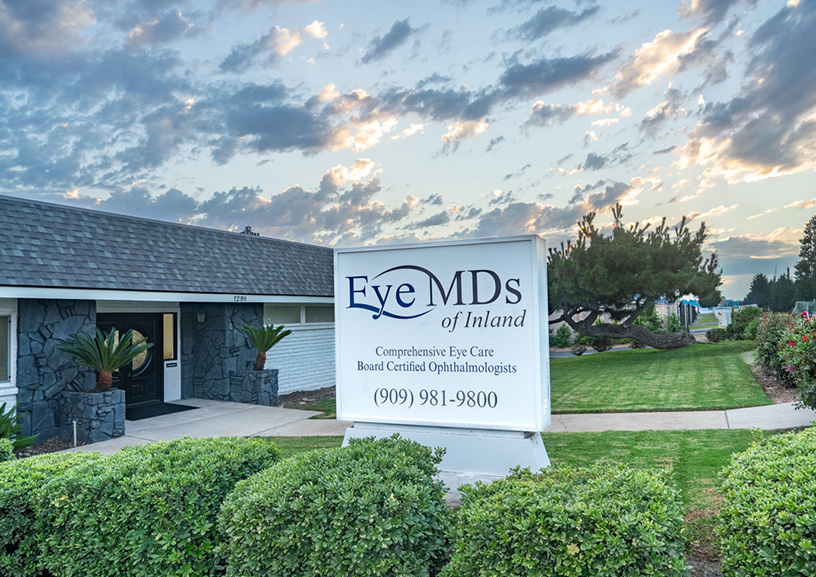
Our office is at 1298 W 7th Street, Upland, CA 91786, with free parking behind the building. We see patients from Upland, Ontario, Rancho Cucamonga, Montclair, Claremont, Chino, Pomona, Fontana and across the Inland Empire. Call 909-981-9800 to schedule your eye exam with an ophthalmologist in Upland.
Se habla español: our entire medical and front-office staff speaks Spanish.